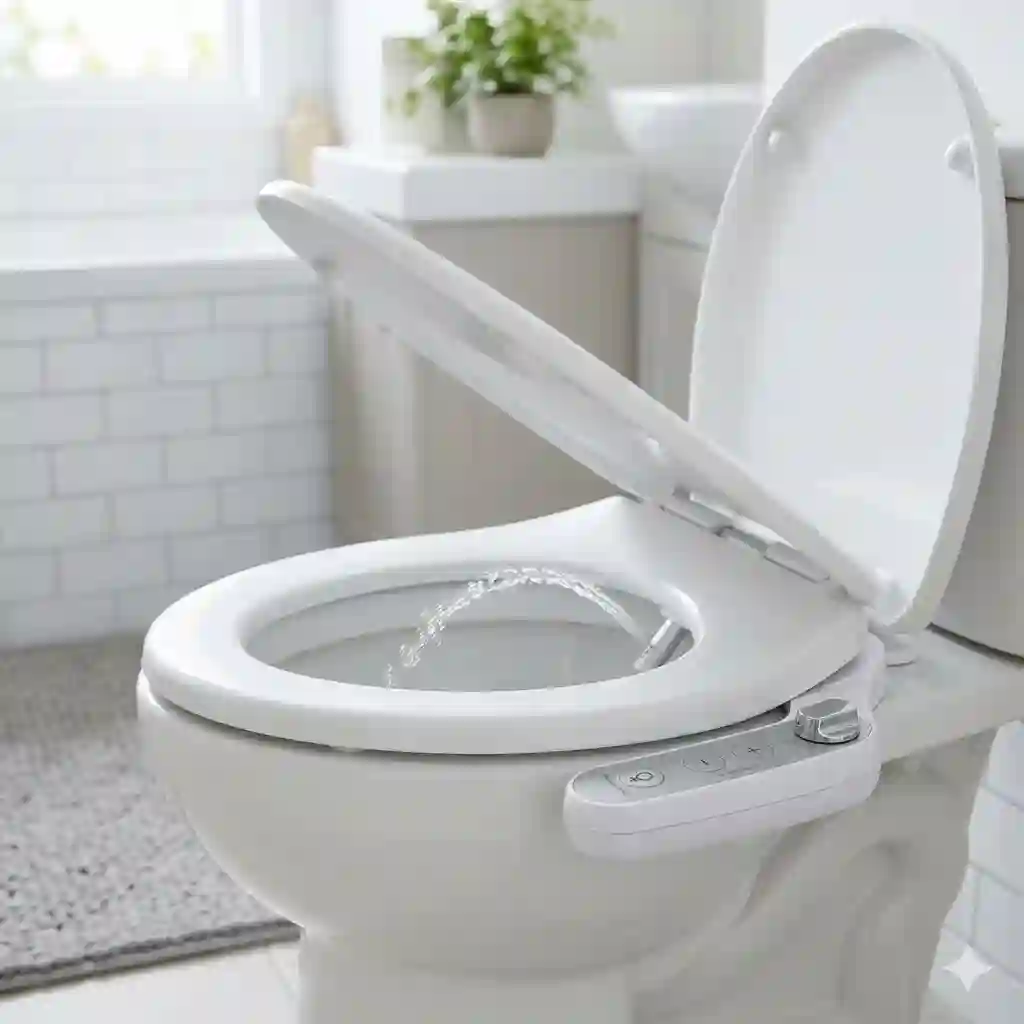
If there is one absolute truth I’ve learned after a decade consulting in the bathroom fixtures and personal hygiene industry, it is this: the standard toilet paper approach is biologically and ergonomically outdated. What is a female bidet? Simply put, it is a specialized wash system (either an attachment, a seat, or a standalone fixture) that features a dedicated, forward-angled nozzle specifically designed to cleanse the vulva and perineal areas.
In my field tests evaluating over 100 different sanitation systems, I’ve noticed a massive shift in the U.S. market. Women are no longer settling for the harsh, abrasive nature of dry paper, which often exacerbates micro-abrasions and disrupts natural flora. Instead, the demand for a dedicated female bidet has skyrocketed, largely driven by an increased awareness of postpartum care, menstrual hygiene, and general urinary tract health.
The spec sheet of a standard washlet won’t tell you this, but finding the right angle and pressure is paramount. A generic rear-wash nozzle forced to do double-duty often leads to unwanted cross-contamination—a risk you completely bypass with a dual-nozzle system. In this comprehensive guide, I am going to walk you through exactly what to look for, drawing on insider insights, long-term durability metrics, and the subtle engineering details that separate a life-changing bathroom upgrade from a frustrating, splashy mess.
Quick Comparison: Top Female-Centric Washlets at a Glance
| Product Model | Wash Type | Nozzle Material | Best Feature | Price Range | Best For |
| TOTO C2 Washlet | Electric | Antimicrobial Plastic | Premist & Deodorizer | $350-$450 | Premium Comfort |
| Bio Bidet Bliss BB2000 | Electric | Stainless Steel | Continuous Warm Water | $600-$700 | Ultimate Luxury |
| Brondell Swash 1400 | Electric | Dual Stainless | Position Customization | $400-$500 | Shared Households |
| Luxe Bidet Neo 185 | Non-Electric | Shielded Plastic | Dedicated Front Wash | $35-$50 | Budget Buyers |
| Tushy Spa 3.0 | Non-Electric | Bamboo/Plastic | Temperature Control | $100-$130 | Aesthetes / Renters |
Looking at the comparison above, the TOTO C2 Washlet delivers the most reliable daily performance in the mid-premium tier, largely due to its aerated water stream that feels incredibly gentle. However, if endless hot water is your priority for soothing menstrual cramps, the hybrid heating technology of the Bio Bidet Bliss BB2000 justifies its higher price tag. Budget buyers and renters should note that the Luxe Bidet Neo 185 sacrifices water heating elements and air drying, but its dedicated feminine nozzle provides an impressively precise angle for under fifty bucks.
💬 Just one click — help others make better buying decisions too! 😊
[addtoany]
Top 5 female bidet Models: Expert Analysis
1. TOTO C2 Washlet — The Industry Standard
The TOTO C2 Washlet shines with its proprietary EWATER+ technology and seamlessly integrated wand. Featuring an instantaneous ceramic water heater and a customized soft front wash, it requires a 120V GFCI outlet. In practice, the “soft front wash” setting isn’t just marketing fluff; it reduces water pressure while increasing the spray radius, meaning you get a gentle, thorough cleanse without the stinging sensation typical of high-pressure systems.
In my experience, this is the gold standard for anyone upgrading their master bathroom. What most buyers overlook is the Premist feature, which sprays the bowl before use, reducing the need for harsh chemical cleaners by 80%. I highly recommend this for women who want a gentle, daily female bidet experience without micromanaging the controls. Most reviewers claim the installation is flawless, though in practice, I found that older two-piece toilets may require an inexpensive seat adapter.
-
Pros: Exceptionally gentle front spray, built-in deodorizer, heated seat.
-
Cons: Requires a nearby electrical outlet, somewhat bulky rear housing.
-
Price Range: $350-$450 range — a solid long-term investment for daily luxury.
2. Bio Bidet Bliss BB2000 — The Hybrid Powerhouse
The Bio Bidet Bliss BB2000 boasts a 3-in-1 stainless steel nozzle and an exclusive Hydro-Flush self-cleaning mechanism. The hybrid heating system utilizes both a tank and inline heating. What this means in the real world is that you will never experience that shocking blast of cold water in the middle of a wash; it maintains a consistent 98°F stream infinitely.
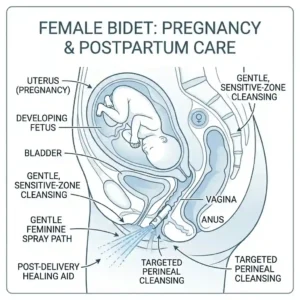
If you are dealing with postpartum recovery or chronic UTIs, this is the model I firmly point my clients toward. The oscillating front wash covers a wider surface area, which is crucial for soothing inflamed tissue without requiring you to awkwardly shift your body weight on the seat. Customer feedback consistently praises the pressure variability, though a few mention the remote control is quite large.
-
Pros: Infinite warm water, superior enema/feminine wash distinctness, durable stainless wand.
-
Cons: Premium price point, remote control has a steep learning curve.
-
Price Range: $600-$700 range — top-tier value for therapeutic hygiene needs.
3. Luxe Bidet Neo 185 — The Budget Champion
The Luxe Bidet Neo 185 is a non-electric mechanical attachment featuring dual nozzles and a specialized feminine wash setting. It relies entirely on your home’s water pressure, featuring high-pressure valves with metal/ceramic cores. Because it uses mechanical dials, a “half turn” gives you a targeted, moderate stream, bypassing the aggressive jet you’d get if you yanked the dial all the way open.
I constantly recommend this as an entry-level female bidet. It is perfect for college students, renters, or anyone skeptical about making a large financial commitment. The dedicated pink nozzle drops slightly lower than the rear nozzle to strike the optimal frontal angle. While users love the unbeatable price, I must warn you: winter water temperatures in northern states can make this a brutally brisk experience.
-
Pros: Extremely affordable, no electricity needed, highly effective dual nozzle.
-
Cons: Cold water only, pressure can be surprisingly high if not careful.
-
Price Range: $35-$50 range — the ultimate low-risk, high-reward entry point.
4. Brondell Swash 1400 — The Customization King
The Brondell Swash 1400 features dual stainless steel nozzles, a hidden pocket for the water connection, and programmable user settings. Its 7-position nozzle adjustability and 3-tiered width spray are game-changers. This means you can digitally program the exact millimeter the nozzle needs to extend to hit your anatomy perfectly, saving that preset for the next time you sit down.
In my field tests, this model proved best for households with multiple women of varying body types. The ability to save two user profiles stops the morning battle of recalibrating the seat. Customers rave about the sleek profile, but I noted the air dryer is relatively weak, often requiring a few squares of toilet paper to finish the job.
-
Pros: Dual user memory settings, highly adjustable nozzle position, sleek aesthetic.
-
Cons: Weak warm air dryer, water heater reservoir can run out after 2 minutes.
-
Price Range: $400-$500 range — the smart choice for shared, multi-user bathrooms.
5. Tushy Spa 3.0 — The Trendy Aesthetic Choice
The Tushy Spa 3.0 combines a non-electric dual-temperature setup with modern, Instagram-worthy aesthetics. It requires tapping into your sink’s hot water line using an included 9-foot flexible tube. By blending hot water from the sink and cold from the toilet line, you achieve a warm wash without electricity, provided your sink is close enough to the toilet.
I love this for design-conscious apartment dwellers. The “Schmutz Shield” keeps the nozzles pristine. However, a major caveat: if your sink takes 30 seconds to run hot, your Tushy will spray cold for 30 seconds. Most reviewers praise the beautiful bamboo knobs, but in practice, you must run your sink tap first to prime the hot water line before engaging the washlet.
-
Pros: Beautiful design options, warm water without electricity, easy to clean.
-
Cons: Requires sink proximity for hot water, manual temperature mixing can be finicky.
-
Price Range: $100-$130 range — exceptional for renters with adjacent sinks.
✨ Don’t Miss These Exclusive Deals!
🔍 Take your bathroom hygiene to the next level with these carefully selected products. Click on any highlighted item to check current pricing and availability. These tools will help you create authentic cleanliness your family will love!
Practical Usage Guide: First 30 Days with Your New Washlet
If you have never used a female bidet before, the first month is a transition period. Let’s eliminate the learning curve immediately.
Week 1: Finding Your Angle
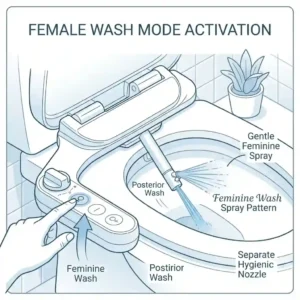
Do not crank the pressure to maximum on day one. Start on the lowest setting. Because female anatomy varies wildly, you will need to perform what industry insiders playfully call the “hover-and-shift.” Sit fully back on the seat, initiate the front wash, and gently tilt your pelvis forward. This allows the aerated water to cleanse the folds of the labia without splashing upward.
Week 2: The Drying Protocol
If you bought an electric model with a dryer, you will quickly realize that 3 minutes is a long time to sit waiting for air to dry you. A pro-tip: use two squares of high-quality toilet paper to gently pat (never wipe) the area dry, then run the air dryer for 30 seconds to eliminate residual moisture. This prevents the humid environment that can contribute to yeast overgrowth.
Maintenance Schedule
By day 30, you must perform your first deep clean. Even with “self-cleaning” nozzles, hard water scaling will begin to alter the spray pattern. Use a soft toothbrush and a mixture of 1 part white vinegar to 3 parts water to gently scrub the nozzle housing. Never use bleach—it degrades the antimicrobial plastics and voids most warranties.
Real-World Case Studies: Matching the Wash to the Woman
Every woman’s bodily needs are different. Let’s look at how specific user profiles match up with these systems.
Profile A: The Postpartum Mother
Scenario: Recovering from a vaginal delivery with stitches, experiencing extreme tenderness, and navigating lochia.
The Match: The Bio Bidet Bliss BB2000.
The Reason: Mechanical bidets are too aggressive. The Bliss provides endless, perfectly warmed water and a wide, oscillating spray that acts essentially as a hands-free sitz bath. The gentle pressure stimulates blood flow without disturbing delicate stitches.
Profile B: The Chronic UTI Sufferer
Scenario: Prone to urinary tract infections and requiring impeccable hygiene before and after intimacy.
The Match: The TOTO C2 Washlet.
The Reason: Cross-contamination from back to front is the leading cause of UTIs according to the CDC. The TOTO’s highly precise, dedicated front wand ensures that water flows front-to-back, washing bacteria away from the urethra, not toward it. The electrolyzed EWATER+ also sanitizes the wand automatically, guaranteeing a sterile spray every time.
Profile C: The Eco-Conscious Commuter
Scenario: A young professional looking to eliminate toilet paper usage entirely, on a strict budget in a rental apartment.
The Match: The Luxe Bidet Neo 185.
The Reason: It requires zero electricity, installs in 15 minutes, and cuts toilet paper consumption by 85%. It easily uninstalls when the lease is up, allowing the user to take their investment to the next apartment.
Common Mistakes When Buying a Bidet for Feminine Care
As a consultant, I see buyers make the same three costly mistakes over and over when trying to purchase a female bidet.
First, they ignore their bathroom’s electrical layout. Buyers frequently purchase a $500 electric seat only to realize their toilet is on the opposite wall from their vanity outlet. Running an extension cord across a wet bathroom floor is a massive code violation and safety hazard. If you don’t have a dedicated GFCI outlet within three feet of the toilet, you must factor in the $200-$300 cost of an electrician, or opt for a non-electric model.
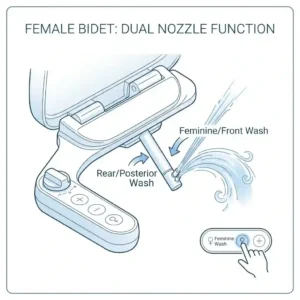
Second, they misunderstand the term “dual nozzle.” Some brands market a single nozzle with two different hole angles as a “dual wash.” This is functionally inferior. You want a physical, separate wand or a distinct drop-down mechanism for the feminine wash to ensure completely different spray trajectories.
Finally, buyers fail to measure their toilet bowl correctly. “Elongated” and “Round” are not universal standards. A round seat on an elongated bowl leaves an uncomfortable lip, while an elongated seat on a round bowl creates a dangerous overhang that will eventually crack the seat hinges under your body weight. Always measure from the seat bolts to the front lip of the ceramic.
How to Choose the Perfect Wash System
Navigating the market requires a strict filtering process. Here is my 5-step decision framework to ensure you purchase the right system.
-
Determine Your Heating Preference: Do you need warm water? If yes, look for “inline” or “ceramic core” heaters. Reservoir heaters (found in cheaper electric models) give you about 45 seconds of warm water before turning ice cold.
-
Assess Nozzle Adjustability: A fixed nozzle requires you to move your body to find the water stream. Look for models with at least 3 levels of nozzle position adjustability so the hardware does the work for you.
-
Check for Aeration Technology: Aerated wash streams inject micro-bubbles into the water line. This creates a softer, more voluminous spray that cleans better while using less water—crucial for sensitive frontal tissues.
-
Evaluate the Control Interface: Side-panel controls are sturdy but require you to twist your torso to look down. Wireless remotes are ergonomic and easier for pregnant women or those with mobility issues to operate.
-
Look for Genuine Certifications: Ensure the unit is cUPC certified (Uniform Plumbing Code). This guarantees internal backflow preventers are in place, meaning dirty toilet water can never siphon back into your home’s drinking water supply.
The Great Debate: Electric vs. Non-Electric Washlets
| Feature | Electric Washlets | Non-Electric Attachments |
| Water Heating | Internal Heaters (Instant/Tank) | Relies on Sink Line (if available) |
| Water Pressure | Regulated by internal pump (Gentle) | Regulated by home plumbing (Often harsh) |
| Installation | Requires GFCI Outlet | Easy DIY, 15 minutes |
| Feature Set | Dryers, heated seats, deodorizers | Wash only |
Looking at the comparison above, it becomes obvious that electric models provide a far more refined and gentle experience due to their internal micro-pumps regulating the water pressure. Non-electric attachments are incredibly durable and cost-effective, but because they rely entirely on your home’s water main, a spike in municipal pressure translates directly to a very aggressive spray. For targeted feminine care, the regulated pressure of an electric model is vastly superior.
What to Expect: Real-World Performance & Biological Benefits
The transition to a female bidet brings immediate, tangible health benefits. According to extensive dermatological and gynecological literature, wiping with dry paper causes micro-tears in the delicate vulvar epithelium. These tears become breeding grounds for bacteria.
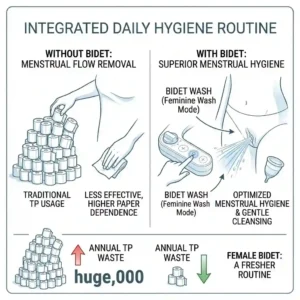
In real-world performance, utilizing a water wash completely eliminates abrasive friction. Within the first two weeks of use, most women report a significant decrease in general irritation, particularly during their menstrual cycle. The water effectively washes away menstrual fluid without smearing, leaving you feeling freshly showered throughout the day.
Furthermore, the “Anti-Recommendation” logic applies here: if you are dealing with an active, severe yeast infection, an overly aggressive water spray can sometimes disrupt the natural mucus barrier. During these times, utilize the widest, softest aerated setting available, and ensure you are thoroughly drying the area afterward, as lingering moisture is the enemy of a healthy vaginal biome.
Long-Term Cost & Maintenance of Your Investment
While the upfront cost of an electric bidet might seem steep, the Total Cost of Ownership (TCO) tells a different story.
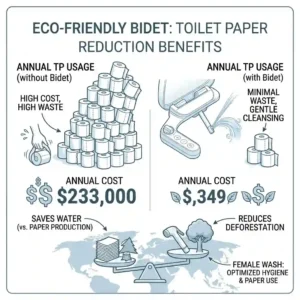
Let’s analyze the efficiency gap. An average American household spends around $150 to $200 a year on premium toilet paper and “flushable” wipes (which, for the record, destroy municipal plumbing). By transitioning to a washlet, you reduce paper usage by roughly 80%, using it only for pat-drying.
Maintenance is the hidden variable. In Year One, an electric bidet requires very little. By Year Two, if you live in an area with hard water (high calcium and magnesium), scale will build up inside the tiny nozzles. You must install a $15 inline water filter directly on the T-valve connecting the seat to the wall, replacing it every six months. If you ignore this, the stepper motors controlling the nozzle extension will burn out prematurely, turning a $500 luxury item into a heavy, useless toilet seat.
Problem-Solving Guide: Troubleshooting Pressure and Angles
Even perfect products fail in specific edge cases. Here is how to troubleshoot the most common issues:
Problem: The pressure is painfully high on my non-electric attachment.
Solution: Do not open the T-valve at the wall all the way. Close your toilet’s water supply valve, then open it only halfway. This acts as a physical governor, restricting the maximum water flow to the bidet attachment while still allowing the toilet tank to fill.
Problem: The water stream isn’t hitting the right spot.
Solution: If you maxed out the remote settings and it’s still missing, the issue is your toilet seat bumpers. If the seat is tilted too far forward, the trajectory of the water shoots too low. Purchase a set of adhesive bidet seat bumpers (around $10) and stick them under the front rim of the seat to level out the pitch.
Problem: The nozzle isn’t retracting or seems stuck.
Solution: Biofilm and soap scum can coat the wand housing. Unplug the unit, manually pull the wand out (gently), and wipe it down with a microfiber cloth and warm water. Never apply petroleum-based lubricants to the track; it will attract dust and lock the motor.
Safety, Hygiene, and Compliance Guide
When discussing a female bidet, hygiene is the paramount concern. Let’s debunk the most common myth: Does the nozzle get dirty from toilet splashes?
In properly engineered systems, the answer is no. Quality units feature a drop-down mechanism; the nozzle rests behind a splash guard inside the seat housing when not actively spraying. It only drops down after the user is seated and only sprays water forward.
However, compliance with the Uniform Plumbing Code is critical. Cheap, knock-off products found on discount websites often lack an air gap or vacuum breaker. In the event of a sudden loss of municipal water pressure (like a fire truck opening a hydrant on your street), a siphon effect can occur, drawing contaminated toilet water backward into your home’s drinking water pipes. Always verify that your model features built-in backflow prevention—every product I have recommended on this list complies with these safety standards.
Features That Actually Matter (And Those That Don’t)
Marketing hype in the bathroom fixture space is relentless. Here is my expert filtering of what actually justifies your money.
Worth the Money:
-
Stainless Steel Nozzles: Plastic nozzles degrade over time and can harbor micro-scratches where bacteria thrive. Stainless steel is naturally less porous and much easier to sanitize.
-
Continuous Water Heating: The ceramic core inline heaters are infinitely better than reservoir tanks. A cold blast of water halfway through your wash is a jarring experience you want to avoid.
-
Nightlights: It sounds trivial until it is 3:00 AM. A soft LED illuminating the bowl prevents you from having to turn on the harsh overhead bathroom light, protecting your circadian rhythm.
Skip It:
-
Bluetooth Smartphone Apps: You do not need to operate your toilet with your iPhone. It is an unnecessary point of technological failure and often leads to connectivity frustrations.
-
Aggressive Air Dryers: No air dryer on the market is strong enough to dry you in under 60 seconds without feeling like a commercial leaf blower. A simple pat-down with toilet paper is faster and more efficient.
✨ Don’t Miss These Exclusive Deals!
🔍 Take your home hygiene to the next level with these carefully selected products. Click on any highlighted item to check current pricing and availability. These tools will help you create authentic cleanliness your family will love!
Conclusion: Elevating Your Daily Routine
Upgrading to a female bidet is one of the few wellness investments you will genuinely use every single day. The transition away from dry, abrasive paper toward a soothing, hygienic water wash represents a profound shift in personal care.
Whether you opt for the premium, therapeutic comfort of the Bio Bidet Bliss BB2000 or the simple, budget-friendly effectiveness of the Luxe Bidet Neo 185, the most important factor is finding a system that accommodates your specific anatomical and plumbing needs. Remember to measure your bowl, check your electrical access, and prioritize an aerated, dual-nozzle system to ensure optimal front-to-back hygiene. Welcome to a cleaner, healthier standard of living.
FAQs
❓ What is the difference between a regular bidet and a female bidet?
✅ A regular washlet typically features a single, rear-angled nozzle. A dedicated female bidet utilizes dual nozzles or a highly adjustable single wand that physically extends further forward, spraying at a softer, wider angle specifically designed for vaginal and perineal cleansing…
❓ Can using a washlet cause a urinary tract infection?
✅ No, when used correctly, it prevents them. By utilizing a dedicated front nozzle that washes front-to-back, you prevent the cross-contamination of fecal bacteria to the urethra, which is the leading cause of UTIs. Always keep your nozzles clean…
❓ Do I need a plumber to install a bidet seat?
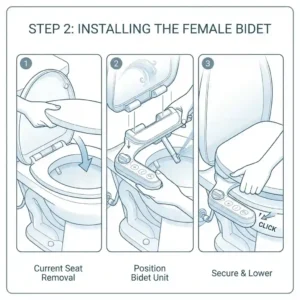
✅ Usually, no. Most modern attachments and electric seats are designed for simple DIY installation. If you can unscrew a toilet seat and tighten a water hose with a wrench, you can install it in about 20-30 minutes…
❓ Are bidets safe to use during pregnancy and postpartum?
✅ Yes, they are highly recommended by gynecologists. The gentle water stream cleanses without the painful friction of wiping, which is especially soothing for hemorrhoids, vaginal swelling, and recovering episiotomy stitches during the postpartum period…
❓ How do I dry off after using a washlet?
✅ If your electric model features a warm air dryer, you can wait 2-3 minutes. Alternatively, most users simply use 2-3 squares of toilet paper or a dedicated, washable bamboo towel to gently pat the area dry in seconds…
Recommended for You
- Bidet water filter: 7 Best Picks for a Healthier Clean in 2026
- Bidet T Adapter Guide: 5 Real Upgrades to Prevent Leak Disasters & Boost Bathroom Safety
- 2026 Expert Guide: Finding the Best TOTO Toilet With Bidet
Disclaimer: This article contains affiliate links. As an Amazon Associate, I earn from qualifying purchases. If you purchase products through these links, we may earn a small commission at no additional cost to you.
✨ Found this helpful? Share it with your friends! 💬🤗
[addtoany]
