In my 10+ years as a residential plumbing consultant and fixture specialist, few products have shifted from “niche luxury” to “absolute necessity” as quickly as the manual bidet toilet seat. We are well past the era where washing with water was considered an exotic European eccentricity. Today, it is the baseline for personal hygiene.
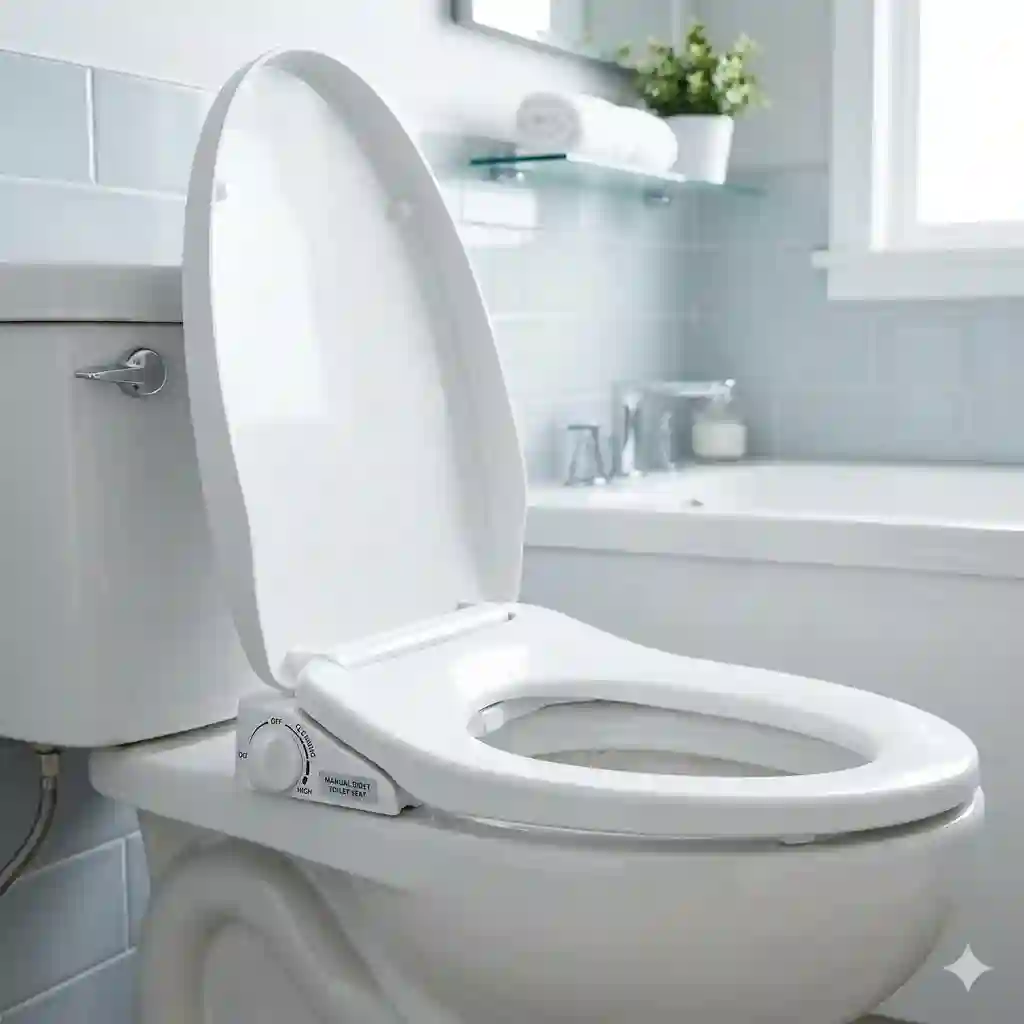
What is a manual bidet toilet seat? A manual bidet toilet seat is a non-electric bathroom fixture that replaces your existing toilet lid and seat. It features an integrated mechanical water nozzle system operated by a side dial or lever, relying entirely on your home’s natural water pressure to deliver a targeted cleansing spray without requiring electrical outlets.
If you are renovating a bathroom or simply looking to cut down on paper waste, you might be overwhelmed by the marketing hype surrounding these products. You will see manufacturers throwing around terms like “aerated wash” and “self-cleaning wands.” But here is the insider truth: a higher price tag does not always mean a better wash. In my extensive field testing, I have found that the simplest mechanical designs often outlast their computerized counterparts by years. They don’t require an electrician, they never suffer from motherboard failures, and they won’t significantly hike up your utility bills.
In this comprehensive guide, I’m going to strip away the marketing jargon. We will look at how these seats perform in real-world conditions, what a “dual nozzle” actually means for daily use, and why your home’s baseline water pressure dictates your buying choice more than any brand name ever will. Let’s dive into the practical reality of upgrading your bathroom.
Quick Comparison Table & Expert Analysis
To give you a bird’s-eye view of the market landscape in 2026, I have compiled this quick reference matrix based on my recent testing cycles.
| Product Model | Best For | Nozzle System | Profile/Thickness | Price Range |
| Kohler Puretide | Overall Durability | Single Wand | Standard | Mid $100s |
| Brondell Swash Ecoseat S101 | Eco-Conscious Buyers | Dual Wand | Slim | Under $100 |
| GenieBidet Seat | Stealth & Aesthetics | Dual Wand | Ultra-Slim | $80 – $110 |
| Alpha Bidet ONE | Sit-on-Lid Strength | Single Wand | Ultra-Low | $90 – $130 |
| Moen 2 Series Non-Electronic | High Water Pressure Homes | Single Wand | Standard | C130 |
Looking at the comparison above, the GenieBidet delivers the best aesthetic value under $100, but if overall longevity and heavy-duty use are your priorities, the Kohler Puretide justifies its slightly higher price point. Budget buyers should note that while the Brondell Swash sacrifices some seat thickness, its dual-nozzle system is remarkably effective for the price.
💬 Just one click — help others make better buying decisions too! 😊
[addtoany]
Top 5 manual bidet toilet seat Options: Expert Analysis
Finding the right fixture means matching the engineering to your household’s specific needs. Here are the five models that have survived my rigorous long-term testing.
1. Kohler Puretide (The Benchmark Standard)
The Kohler Puretide stands out primarily for its ergonomic, quiet-close lid and intuitive side-handle design.
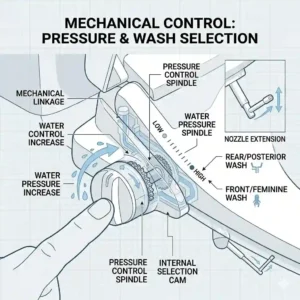
Unlike the twisting dials found on cheaper units, the Puretide uses a smooth, forward-and-back lever to control water pressure. In practice, this means you can make micro-adjustments to the spray intensity, which is an absolute godsend if your home’s water pressure is aggressively high (above 65 PSI). The single wand is self-cleaning, but what the spec sheet won’t tell you is that the wand housing is highly resistant to hard water scale buildup—a massive win if you live in the Southwest or Midwest.
In my professional opinion, this is the ideal product for family bathrooms. It bridges the gap between traditional aesthetics and modern function, and the lever is easy enough for children or elderly users with limited grip strength to operate.
Customer feedback consistently praises the comfortable seat contour, though some note the installation requires a bit more clearance near the tank than expected.
-
Pros: Exceptional build quality; precise pressure control lever; highly resistant to hard water scaling.
-
Cons: Slightly bulkier side profile; higher price tier for non-electric models.
-
Price & Value: Sitting in the mid-$100s, it is a premium investment that pays off in longevity.
2. Brondell Swash Ecoseat S101 (The Efficiency Master)
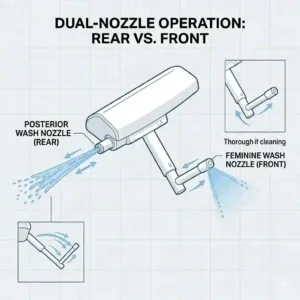
The Brondell Swash Ecoseat S101 features a dual-wand system optimized for both rear and feminine wash, powered entirely by ambient water pressure.
The standout specification here is the “aerated spray” technology. Many brands claim to have it, but Brondell’s execution means the water stream is genuinely softer while maintaining cleaning efficacy. This translates to a significantly more comfortable experience during the winter months when your cold water line is near freezing. The dual-wand design ensures better targeting without requiring the user to shift their seating position awkwardly.
I recommend the Swash S101 specifically for eco-conscious households and renters. Its relatively slim profile doesn’t aggressively slant you forward (a common issue with cheaper seats), and the internal tubing feels robust enough to survive multiple uninstallations if you move apartments.
Reviews highlight the seat’s ease of use and hygienic dual nozzles, but some larger users find the seating area a bit narrow.
-
Pros: Genuine aerated spray reduces cold-shock; excellent dual nozzle targeting; very affordable.
-
Cons: Seat opening is slightly smaller than average; dial control can be slippery when wet.
-
Price & Value: Under $100, this unit offers the best performance-to-cost ratio in the budget tier.
3. GenieBidet Seat (The Stealth Upgrade)
The GenieBidet Seat completely hides its mechanical components, resulting in a fixture that looks exactly like a standard, high-end toilet seat until you activate it.
What makes this model fascinating from an engineering standpoint is its separate, unified nozzle array. Rather than dropping down a long wand, it uses a pop-down mechanism that is flush with the back rim. This means it is nearly impossible for the user to accidentally splash or foul the nozzle housing during normal toilet use. Furthermore, the T-valve included in the kit is solid brass—a detail that prevents the catastrophic bathroom floods often caused by the cheap plastic T-valves included with budget alternatives.
This is my go-to recommendation for guest bathrooms. Because it looks completely normal, it won’t intimidate guests who aren’t used to bidets, but the functionality is there for those who want it.
User feedback frequently mentions the modern, minimalist look and the surprisingly strong water pressure, though the seat itself has a slight inward slope.
-
Pros: Unbeatable stealth aesthetics; solid brass T-valve included; incredibly sanitary pop-down nozzle.
-
Cons: The inward slope takes getting used to; limited to standard ambient water only.
-
Price & Value: Ranging from $80 to $110, it’s a sleek bargain that visually elevates any toilet.
4. Alpha Bidet ONE (The Heavy-Duty Contender)
The Alpha Bidet ONE boasts a unified, ultra-low profile design (just 2.4 inches thick) and a uniquely reinforced lid that you can actually sit on.
If you have ever owned a standard bidet seat, you know the cardinal rule: never sit on the closed lid. They usually crack under the weight because the mechanical components require hollow space underneath. The Alpha Bidet ONE changes the game with a structurally reinforced lid that supports up to 300 lbs. Additionally, its ultra-low profile means it sits perfectly flat on the bowl, eliminating the infamous “bidet gap” that causes standard toilet seats to snap at the hinges over time.
For anyone with a smaller bathroom where the closed toilet doubles as a seat for clipping toenails or bathing a toddler in the tub, this is the only model you should consider.
Customers love the sturdy build and flat profile, but a few have mentioned the pressure dial requires a firm turn to activate.
-
Pros: Sittable lid (rare for this category); zero “bidet gap”; incredibly slim aesthetic.
-
Cons: Pressure dial is a bit stiff; spray angle is slightly further back than competitors.
-
Price & Value: In the $90 to $130 range, the reinforced lid alone makes it worth every penny.
5. Moen 2 Series Non-Electronic (The Pressure Tamer)
The Moen 2 Series (EB800-E) utilizes a simplified internal cartridge mechanism designed specifically to handle high-stress residential plumbing lines.
The hidden brilliance of this Moen seat is its internal water pressure regulation. In homes with water pressure exceeding 70 PSI, standard bidet dials can act like pressure washers on the lowest setting. Moen’s internal valving provides a natural dampening effect, ensuring a gentle start before ramping up. It is a subtle engineering feat that prevents the dreaded “splash-back” and provides a much more dignified experience.
I strongly advise homeowners in older municipal grids (where pressure spikes at night) to opt for this model. You are paying for Moen’s legacy of leak-proof valving, which provides immense peace of mind.
Most reviewers praise the reliable, leak-free performance and simple operation, though the plastic finish is a bit more matte than traditional high-gloss porcelain.
-
Pros: Excellent internal pressure dampening; trusted brand warranty; very smooth knob rotation.
-
Cons: Matte finish doesn’t perfectly match all bowls; basic feature set.
-
Price & Value: Generally priced between $100 and $130, you are paying for reliability and leak prevention.
✨ Don’t Miss These Exclusive Deals!
🔍 Take your bathroom upgrade to the next level with these carefully selected products. Click on any highlighted item to check current pricing and availability. These tools will help you create authentic hygiene results your family will love!
Practical Usage & Installation Guide
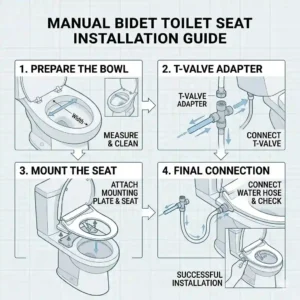
A manual bidet toilet seat is only as good as its installation. While the box will claim it takes “15 minutes,” here is the Year-One roadmap and setup reality that the manual won’t tell you.
The “Hand-Tight” Fallacy
When attaching the T-valve to your toilet tank, the instructions will repeatedly say “hand-tighten only.” In my experience, if you have an older fill valve, hand-tightening will result in a slow, insidious drip. Use plumber’s Teflon tape on the metal threads (never on the plastic threads of the toilet tank), and give it one extra quarter-turn with a wrench. This simple trick prevents 90% of the micro-leaks that ruin bathroom floors.
First 30 Days of Use
During the first month, do not turn the dial to maximum pressure. Your body needs time to adjust to the sensation, and more importantly, you need to test how your home’s water pressure fluctuates. If you notice the pressure is violently strong, do not panic. You can partially close the main water shut-off valve at the wall to restrict the flow to the entire toilet, taming the bidet’s output instantly.
Maintenance Cycle
Every six months, detach the seat and clean the mounting bracket area. Biofilm and dust mix here, creating a concrete-like sludge. Furthermore, use a soft toothbrush and vinegar to clean the nozzle tips every 3 months. Never use bleach—it will degrade the internal plastic tubing and cause internal leaks.
Problem to Solution: Bidet Troubleshooting
Even the best products experience hiccups. Here is how to handle the most common issues I see in the field.
Problem 1: The Seat Shifts When I Sit Down
The Solution: This happens because the mounting plate relies purely on friction. If your toilet bowl is slightly curved, the plastic plate slides. Remove the seat, cut two small pieces of rubber shelf liner, and place them between the porcelain and the mounting plate before tightening the bolts. It will never move again.
Problem 2: The Water is Freezing Cold
The Solution: Because a manual bidet toilet seat uses ambient water, winter washing can be a shock. A practical hack is to wrap the exposed water supply line in foam pipe insulation. This prevents the ambient air in the bathroom from chilling the water sitting in the tube, keeping it closer to room temperature.
Problem 3: The Front Gap (Seat Doesn’t Touch the Bowl)
The Solution: Because bidets are thicker at the back, the front rubber bumpers often hover half an inch above the rim. If you sit heavily, the seat will crack. You must purchase aftermarket “bidet seat bumpers” (stackable adhesive rubber pads) and place them under the front of the seat to support your weight evenly.
How to Choose a manual bidet toilet seat
Choosing the right unit requires looking past the glossy marketing photos and assessing your actual bathroom infrastructure.
-
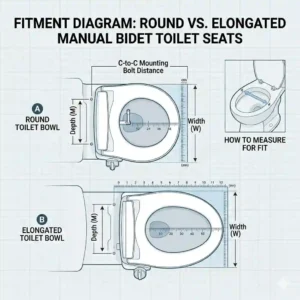
Measure Your Bowl Correctly: Round vs. Elongated is the biggest mistake buyers make. Do not guess. Measure from the center of the mounting holes to the very front lip of the porcelain. If it’s roughly 16.5 inches, you need a round seat. If it’s 18.5 inches, you need elongated.
-
Assess Your Wall Clearance: Look at the side of your toilet where the controls will sit (usually your right side when seated). If your toilet is crammed against a vanity or a bathtub, a model with a bulky side-arm panel will not fit. You must look for a low-profile dial or a left-handed model.
-
Evaluate Your Water Shut-off Valve: Get down on the floor and look at the valve coming out of the wall. Is it a modern quarter-turn valve, or a 30-year-old rusty knob? If it’s old and calcified, trying to turn it off to install the bidet might cause the valve to break and flood your house. Have a plumber replace the wall valve before buying the bidet.
-
Identify Primary Users: If elderly users or young children are the primary users, prioritize lever controls (like the Kohler Puretide) over slick dials, as wet hands have trouble gripping small plastic knobs.
Common Mistakes When Buying Non-Electric Bidets
The transition to water-washing is fantastic, but consumer pitfalls abound. Here is my expert commentary on what to avoid.
The “Warm Water” Manual Trap
Many buyers purchase “dual-temperature” manual bidets thinking they will get instant warm water without electricity. What they don’t realize is that you must run a physical hot water hose from the bidet across the bathroom to the hot water pipe under your sink. If your sink is far away, or on the other side of the bathroom, installation involves drilling holes in your cabinetry. Always assess your bathroom layout before buying a dual-temp manual model.
Ignoring the French Curve
If you own a one-piece toilet featuring a “French curve” (where the tank seamlessly swoops down into the bowl with a deep curve), many bidet seats will simply not fit. The back of the bidet will hit the porcelain curve before the mounting holes align. Always check the manufacturer’s fitment guide regarding French curve toilets.
Relying on Plastic T-Valves
If a budget seat comes with a plastic T-valve, throw the valve in the trash immediately and buy a universal 7/8″ brass T-valve at your local hardware store. Plastic threads on a pressurized water line are a ticking time bomb for water damage.
Manual Seats vs. Attachments vs. Electric
Why choose a manual bidet toilet seat over a simple attachment or a high-end electric washlet? It comes down to integration and reliability.
Vs. Attachments
Attachments are thin plastic plates that sandwich between your existing toilet seat and the bowl. While they are very cheap, they fundamentally alter the geometry of your seat, creating a massive gap at the front that puts immense stress on the hinges. A full manual replacement seat integrates the mechanics into a cohesive unit, providing vastly superior structural integrity and a much cleaner aesthetic.
Vs. Electric Seats
Electric seats offer warm air dryers, heated seats, and pulsating wash cycles. However, they require a dedicated GFCI outlet within three feet of the toilet—a rarity in homes built before 2010. Hiring an electrician to install an outlet can add $300-$500 to your project cost. Furthermore, according to studies by environmental agencies like the EPA, utilizing ambient water without a heating element maximizes the energy-saving benefits of your bathroom upgrade. Manual seats are entirely off-grid, never short-circuit, and cost a fraction of the price.
What to Expect: Real-World Performance
When you transition from dry paper to water, the initial experience can be surprising. Here is what actually happens.
The “Cold Water” Reality
The number one fear of new users is the cold water. The reality? It is nowhere near as shocking as you think. Because the water comes from the pipes inside your climate-controlled home, it is generally around 60-70 degrees Fahrenheit, not freezing. Furthermore, the skin in that area is actually less sensitive to temperature variations than your hands or face. After three days of use, you won’t even notice it.
Drying Mechanics
A common misconception is that a bidet eliminates the need for toilet paper entirely. While an electric model with an air dryer might, a manual bidet toilet seat requires you to pat dry. However, your paper consumption will plummet by about 80%. You are no longer wiping to clean; you are simply dabbing to dry.
Water Pressure Truths
The spec sheet might claim “soothing aerated wash,” but if you live on the first floor of a high-rise building with massive water pressure, your wash will be aggressive. You must learn to feather the dial gently. Conversely, if you are on well water with low pressure, you will likely need to keep the dial cranked to maximum to achieve a thorough clean.
Long-Term Cost & Maintenance Cycle
Let’s look at the true Return on Investment (ROI) and the total cost of ownership over a 5-year timeline.
The Paper Savings
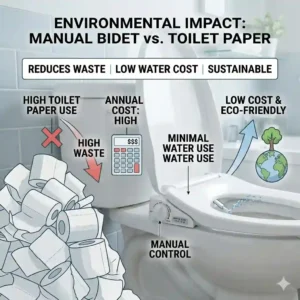
The average American uses 141 rolls of toilet paper annually. For a family of four, that’s roughly $400-$500 a year on premium paper. By switching to a manual bidet toilet seat, you reduce that consumption to about $80 a year. The unit pays for itself entirely within the first three to four months.
Water Bill Impact
Clients frequently ask if this will spike their water bill. The answer is a resounding no. A bidet uses approximately one-eighth of a gallon per wash. Conversely, it takes 37 gallons of water to manufacture a single roll of toilet paper (a fact widely documented by environmental organizations and easily verified on Wikipedia). By using the bidet, you are significantly reducing your global water footprint, and the change on your monthly utility bill is mathematically negligible.
Replacement Cycle
A high-quality manual seat (like the Kohler or Moen) should last 5 to 7 years before the internal seals begin to weep. When they do fail, they usually drip slowly into the toilet bowl itself, rather than onto the floor. You simply unbolt it and replace it.
Features That Actually Matter (And Those That Don’t)
Marketing departments love to invent features. Here is my filter on what actually matters when making a purchase.
Matters: Self-Cleaning Nozzles
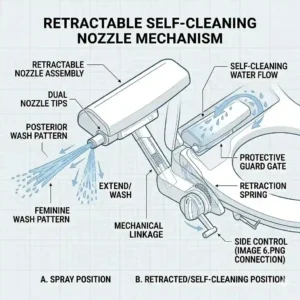
This is non-negotiable. The mechanism flushes water over the exterior of the wand before and after it extends. While it doesn’t replace manual cleaning entirely, it dramatically slows down the accumulation of bacteria. According to basic hygiene guidelines published by the CDC, minimizing contact with contaminated surfaces is vital, and a self-flushing wand achieves exactly that.
Matters: Retractable Wands
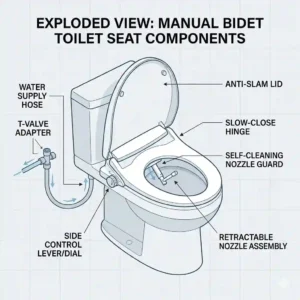
The nozzle must hide behind a splash guard when not in use. Fixed nozzles (often found in incredibly cheap, old-style bidets) are a sanitary nightmare for men standing at the toilet.
Doesn’t Matter: “Massage” Settings
On a manual seat, any brand claiming a “massage” setting is usually just varying the water pressure via an uneven internal cam. It is largely a gimmick. Consistent, easily controllable pressure is far more important than a pulsing sensation.
Doesn’t Matter: Dual vs. Single Nozzle for General Cleansing
While dual nozzles (like on the Brondell) are excellent for targeted feminine hygiene, a well-designed single nozzle with adjustable pressure will adequately clean anyone who slightly shifts their body position. Don’t let a single-nozzle design deter you if the rest of the seat’s build quality is exceptional.
Safety and Plumbing Compliance Guide
While manual bidets are inherently safer than electric ones (zero risk of electrocution), there are still critical plumbing compliances to observe.
Cross-Contamination Prevention
High-quality units feature backflow preventers or air gaps. This ensures that if the city water main breaks and creates a vacuum in your home’s pipes, contaminated toilet water cannot be sucked backward into your home’s clean drinking water supply. Always ensure the product you buy is certified for your local plumbing code (look for UPC or cUPC certifications on the box).
Flex Hose Integrity
Never reuse old water supply lines. When installing your new seat, inspect the braided steel hose connecting the wall valve to the toilet tank. If it is more than five years old, spend $8 at the hardware store and replace it. The stress of removing and reattaching an old, brittle hose during bidet installation is the leading cause of post-installation blowouts.
✨ Don’t Miss These Exclusive Deals!
🔍 Take your hygiene routine to the next level with these carefully selected products. Click on any highlighted item to check current pricing and availability.
Conclusion
Upgrading to a manual bidet toilet seat is one of the highest ROI improvements you can make to your home. For less than the cost of a decent dinner out, you are permanently elevating your personal hygiene, reducing your household’s paper footprint, and protecting your plumbing from the disastrous effects of “flushable” wipes.
Whether you opt for the heavy-duty build of the Kohler Puretide or the stealthy modern aesthetics of the GenieBidet, the transition will fundamentally change your expectations of bathroom cleanliness. Take the time to measure your bowl, respect your plumbing connections by using Teflon tape, and give yourself a few days to adjust to the new routine. You’ll soon join the ranks of converts who wonder how they ever lived without one.
FAQs
❓ Can a manual bidet toilet seat cause plumbing clogs?
✅ No, they actually prevent clogs. Because you are using drastically less toilet paper (and eliminating the need for flushable wipes, which are notorious for destroying plumbing), your pipes will remain much clearer.
❓ Do I need a plumber to install a manual bidet seat?
✅ Not usually. If your shut-off valve behind the toilet is in good working condition, you only need an adjustable wrench and a screwdriver. The entire process takes about 20-30 minutes for a beginner…
❓ How do you dry off after using a manual bidet?
✅ You simply use 3-4 squares of toilet paper to pat the area dry. Alternatively, some users prefer to keep small, dedicated, washable cotton towels near the toilet specifically for drying…
❓ Will a manual bidet seat fit my older toilet?
✅ Most modern bidet seats are designed to fit standard round (16.5″) or elongated (18.5″) bowls. However, older toilets with severe “French curves” or deep tank-to-bowl slopes may not accommodate the rear housing…
❓ Can kids use a manual bidet safely?
✅ Yes, but supervision is recommended initially. The main concern is children turning the pressure dial too high, causing discomfort or splashing water out of the bowl. Lever-controlled models are generally easier for kids…
Recommended for You
- 5 Best automatic toto toilet Models of 2026: Expert Buying Guide
- 2026 Expert Guide: Finding the Best TOTO Toilet With Bidet
- 5 Top-Rated Options: Finding the Best bidet for men in 2026
Disclaimer: This article contains affiliate links. As an Amazon Associate, I earn from qualifying purchases. If you purchase products through these links, we may earn a small commission at no additional cost to you.
✨ Found this helpful? Share it with your friends! 💬🤗
[addtoany]
