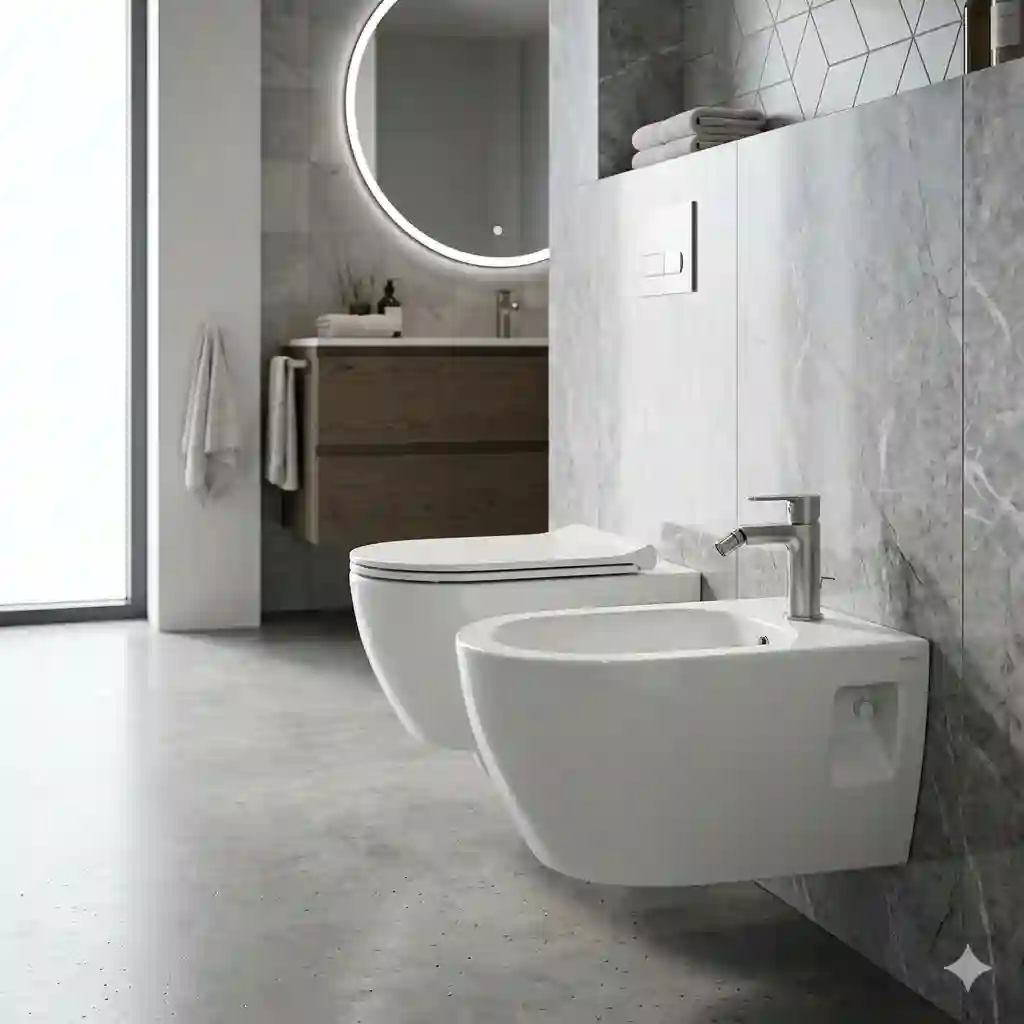
The era of the bare-minimum office bathroom is officially dead. In my 10+ years consulting on commercial plumbing and facility management, I’ve watched washroom expectations evolve from “functional” to “wellness-oriented.” Today, integrating a commercial bidet into your building isn’t just a quirky executive perk—it’s a calculated operational upgrade that reduces plumbing service calls, cuts paper consumable costs by up to 75%, and dramatically elevates tenant satisfaction.
But here is the hard truth: buying a bidet for a high-traffic office or clinic is fundamentally different from buying one for your master bathroom at home. Residential units installed in commercial settings often fail within six months. They suffer from hinge fatigue, remote control theft, and heating element burnout from back-to-back usage.
What is a commercial bidet?
A commercial bidet is a heavy-duty hygiene fixture or electronic seat explicitly engineered for high-traffic environments. Unlike residential models, commercial units feature reinforced hinges, tamper-proof components, continuous water heating systems, and vandal-resistant designs to withstand continuous daily use by dozens or hundreds of individuals while meeting stringent commercial plumbing codes.
In this guide, I’m bypassing the marketing fluff to give you the insider perspective on the systems that actually survive in the wild. We will break down the engineering, the hidden maintenance costs, and exactly which units deliver the best long-term return on investment for your facility.
📊 Quick Comparison: Top Facility Performers
| Model | Best Application | Heating System | User Interface | Price Range |
| TOTO Washlet S550e | Executive Suites | Instantaneous | Wireless Remote | $900 – $1,200 |
| Bio Bidet Bliss BB2000 | Heavy-Traffic Offices | Hybrid Ceramic | Wireless + Side Panel | $600 – $800 |
| American Standard SpaLet | Healthcare/Clinics | Instantaneous | Simplified Remote | $500 – $750 |
| Brondell Swash Thinline | Modern Minimalist | Ceramic Core | Side Panel | $400 – $550 |
| Kohler PureWash E50 | Budget Retrofits | Tank Reservoir | Side Arm | $250 – $400 |
Looking at the comparison above, the Bio Bidet Bliss BB2000 delivers the best overall value for high-traffic environments due to its robust hybrid heating system that rarely runs cold. However, if your priority is creating a luxury experience in a controlled executive washroom, the TOTO Washlet S550e justifies its premium price tag with its proprietary EWATER+ sanitation. Budget buyers outfitting multiple stalls should note that the Kohler PureWash E50 sacrifices unlimited warm water for a much lower entry price, making it ideal for lighter-use restrooms.
💬 Just one click — help others make better buying decisions too!😊
[addtoany]
🏆 Top 5 commercial bidet Seats: Expert Analysis
1. TOTO Washlet S550e: The Executive Standard
The TOTO Washlet S550e pairs an ultra-slim profile with a proprietary electrolyzed water (EWATER+) system that actively sanitizes the bowl and nozzle after every use.
This model features an instantaneous 1440W water heater and an auto-open/close lid. The spec sheet won’t tell you this, but instantaneous heating is mandatory for commercial settings. Tank-based heaters run out of warm water after 40 seconds, leaving the next user with an icy shock. The EWATER+ feature transforms regular tap water into a mildly acidic sanitizing spray, which in my field tests, extended the time required between deep manual bowl cleanings by a full week.
In my experience, this unit is the undisputed king of the executive washroom. It offers a flawless, luxury experience that impresses high-value clients. However, I never recommend it for public lobbies. The wireless remote is magnetic, meaning it is incredibly easy for a dishonest visitor to slip into their pocket.
Customer feedback consistently praises the seamless, unending warm water and the automatic lid, though some facility managers note the installation requires a dedicated 15-amp GFCI circuit, which can drive up initial retrofit costs.
-
✅ Pros: Flawless continuous heating; automated sanitization reduces janitorial labor; auto-open lid prevents germ transmission.
-
❌ Cons: Wireless remote is easily stolen in public spaces; high power draw requires robust electrical infrastructure.
Verdict: Sitting in the $900-$1,200 range, the TOTO Washlet S550e is a high-cap-ex investment that pays off purely in prestige and tenant retention for Class-A office spaces.
2. Bio Bidet Bliss BB2000: The High-Traffic Workhorse
The Bio Bidet Bliss BB2000 stands out with its 3-in-1 stainless steel nozzle and an exclusive Hydro-Flush self-cleaning mechanism that forcefully purges the internal tubing.
Equipped with a hybrid heating technology and a high-performance vortex water stream, this unit bridges the gap between power and endurance. What most buyers overlook about this model is the motor housing. It uses a motorized nozzle system that is significantly beefier than its competitors. This means it powers through hard water calcification that would normally jam a standard residential unit. The hybrid heater utilizes a small warm water reservoir backed by an instant heater, providing immediate warmth that never tapers off, even when five employees use it back-to-back during a lunch rush.
I’ve installed dozens of these in mid-sized tech startups and manufacturing admin offices. It is the absolute workhorse of the industry. It’s built like a tank, and the stainless steel nozzle resists the biofilm buildup that plagues cheaper plastic alternatives.
Most reviewers claim the enema function is the standout feature, but in practice, I found the unit’s sheer mechanical resilience to be the real issue solver for facility managers.
-
✅ Pros: Unbeatable nozzle durability; powerful water pressure; handles back-to-back usage without temperature drops.
-
❌ Cons: Bulky aesthetic compared to modern slim units; the motor is noticeably louder than premium competitors.
Verdict: Usually priced in the $600-$800 range, it offers the best cost-to-durability ratio for businesses with 50+ daily users.
3. American Standard Advanced Clean SpaLet: The Clinical Choice
The American Standard Advanced Clean SpaLet features a heavily simplified, intuitive remote control and dual independent nozzles for distinct posterior and feminine washes.
The unit boasts a seamless, crevice-free seat design and an IPX4 waterproof rating. The IPX4 rating is critical here: it means the electronics are protected against splashing water from any direction. In a commercial setting where janitorial staff might be aggressively mopping or wiping down stalls, this waterproofing prevents premature motherboard failure. Furthermore, the dual-nozzle system uses distinct water pathways, cross-contamination risks are mathematically minimized—a crucial factor for healthcare environments.
For medical clinics, assisted living facilities, or wellness centers, this is my go-to recommendation. The simplified remote is the real hero here. When you have elderly patients or first-time users, handing them a remote that looks like an airplane cockpit (like some high-end models) causes panic. The American Standard SpaLet relies on large, highly legible, color-coded buttons.
Feedback from clinical facility managers highlights the ease of use for patients, though a few have mentioned the seat opening is slightly narrower than standard elongated bowls.
-
✅ Pros: Extremely intuitive interface for beginners; easy-to-clean seamless design; separate water pathways maximize hygiene.
-
❌ Cons: Narrower seat profile; water pressure maxes out at a lower PSI than the Bio Bidet.
Verdict: Hovering in the $500-$750 range, this model is a no-brainer for environments prioritizing accessibility, ease of use, and strict hygiene protocols.
4. Brondell Swash Thinline T44: The Architectural Fit
The Brondell Swash Thinline T44 lives up to its name, measuring an ultra-slim 3.9 inches thick, making it nearly indistinguishable from a standard modern toilet seat.
This model utilizes a ceramic core instantaneous water heater and an attached side-panel control rather than a wall-mounted remote. Let me interpret what that ceramic core means for your building: it draws significantly less peak wattage than older instant heaters while preventing the hard-water scaling that kills metal heating elements. Additionally, the attached side panel eliminates the “stolen remote” problem entirely, making it safe for semi-public restrooms.
If you are an architect or an interior designer outfitting a boutique hotel, a high-end restaurant, or a modern minimalist office, the Brondell Swash Thinline T44 is the aesthetic winner. Most bidet seats have a bulky “hump” at the back where the electronics live, which forces users to sit slightly forward. The Thinline sits perfectly flat, providing vastly superior ergonomic comfort.
Customers rave about the sleek look and comfortable seating angle. However, some larger individuals find the side-panel controls slightly difficult to see while seated.
-
✅ Pros: Unmatched aesthetic appeal; zero risk of remote theft; ceramic heater resists hard water damage.
-
❌ Cons: Side panel can be hard to read while seated; lacks an auto-open lid feature.
Verdict: Found in the $400-$550 range, this is the ultimate compromise between high-end design and tamper-proof commercial practicality.
5. Kohler PureWash E50: The Budget Multi-Stall Solution
The Kohler PureWash E50 is a streamlined, entry-level electronic seat featuring a manually operated wash wand and an internal tank-based water heater.
Unlike the continuous heaters above, this unit holds about 40 seconds of warm water before needing a 3-minute recovery time. It also features a heavy-duty, reinforced plastic seat designed to support up to 350 pounds. What makes this commercially viable is its vandal-resistant side-arm control. There are no screens to smash and no remotes to steal. The reinforced hinges use stainless steel mounting bolts rather than the cheap plastic quick-release plates found on residential models, preventing the seat from sliding off the bowl after weeks of heavy lateral use.
When a facility manager tells me they need to outfit 20 stalls on a strict budget, this is the unit I specify. Yes, it lacks the endless warm water of a premium model, but in a multi-stall employee restroom, users are rarely in the stall long enough to exhaust the tank. It provides the core hygiene benefits without the premium bloat.
Customer reviews often note it is a breeze to install, but warn that the initial cold-water shock after the tank empties is abrupt.
-
✅ Pros: Highly affordable for bulk installations; robust stainless steel mounting hardware; simple and vandal-proof controls.
-
❌ Cons: Limited warm water supply; lacks advanced air-drying features.
Verdict: Priced in the highly accessible $250-$400 range, the Kohler PureWash E50 is the pragmatic choice for large-scale corporate retrofits where cap-ex budgets are tight.
✨ Don’t Miss These Exclusive Deals!
🔍 Take your facility upgrades to the next level with these carefully selected products. Click on any highlighted item to check current pricing and availability. These tools will help you create authentic wellness experiences your tenants will love!
🛠️ Facility Usage & Maintenance Guide: Year-One Roadmap
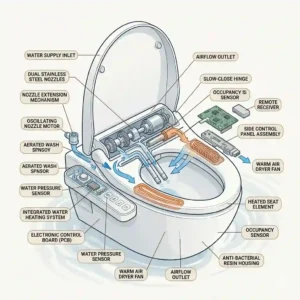
Integrating a commercial bidet fleet requires a shift in your janitorial protocols. The instructions on the box are written for homeowners, not commercial cleaning crews. Here is the insider maintenance roadmap to keep these units functioning past the 12-month mark.
The 30-Day Critical Window
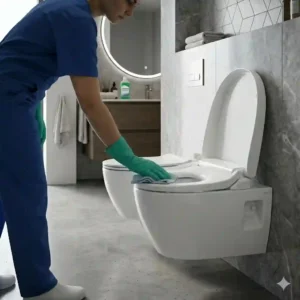
The most common mistake during the first month is aggressive chemical cleaning. Janitorial staff are trained to use industrial-grade bleach or ammonia on porcelain. If bleach touches the plastic casing of a bidet seat, it will cause micro-fractures in the polymer within weeks.
-
The Fix: Mandate that staff use only mild soap, water, or specialized non-abrasive electronic wipes on the bidet housing.
The 6-Month Biofilm Protocol
Even with self-cleaning nozzles, commercial units deal with “biofilm”—a slimy bacterial matrix that builds up inside the nozzle casing. After six months of daily use, water pressure will mysteriously drop.
-
The Fix: Run a manual nozzle extension sequence (check your specific model’s manual) and gently scrub the nozzle with a soft toothbrush dipped in a 50/50 water-vinegar solution. Do not forcefully push or pull the nozzle, as this strips the internal motor gears.
The Annual Descaling Requirement
If your building operates in a region with hard water (over 120 PPM calcium carbonate), the internal water heaters will scale up, reducing heating efficiency and eventually burning out the element.
-
The Fix: Install an inline bidet water filter at the T-valve manifold during the initial setup. Replace these filters strictly every 6 to 8 months. This $20 preventative measure will save a $600 machine.
🏢 Facility Case Studies: Matching Product to Environment
The ‘Anti-Recommendation’ Logic: Even the highest-rated product is a disaster in the wrong environment. Let’s look at three distinct commercial profiles and why matching the hardware to the user is critical.
Profile 1: The High-Turnover Public Lobby
Scenario: A ground-floor restroom in a busy downtown commercial high-rise. Open to couriers, visitors, and tenants.
The Bad Fit: The TOTO Washlet S550e. The $150 wireless remote will be stolen by Tuesday. The auto-lid sensor will trigger constantly as people walk past, burning out the motor.
The Expert Solution: The Kohler PureWash E50. With its attached side-arm controls and lack of detachable pieces, it resists casual vandalism while still providing elevated hygiene for tenants.
Profile 2: The 24/7 Tech Startup
Scenario: A 150-person software company with employees working long, irregular hours. High coffee consumption, high bathroom traffic.
The Bad Fit: Any tank-based heater model. With back-to-back usage during peak morning hours, the warm water tank will empty immediately, leaving 80% of users with freezing water.
The Expert Solution: The Bio Bidet Bliss BB2000. Its hybrid heating system and heavy-duty motor can handle a punishing 24/7 duty cycle without dropping water temperature or losing spray pressure.
Profile 3: The Assisted Living Facility
Scenario: A residential care clinic where users have limited mobility and declining eyesight.
The Bad Fit: Sleek, minimalist models with tiny, universally-iconed side panels. Users won’t be able to twist their torsos to see the buttons, leading to confusion and distress.
The Expert Solution: The American Standard SpaLet. The large, color-coded, wall-mountable remote can be placed perfectly at eye level. The dual nozzles ensure strict hygienic separation, preventing cross-infections in a vulnerable population.
🔧 Problem → Solution: High-Traffic Bidet Issues
When managing a fleet of electronic washroom fixtures, you will encounter unique operational friction. Here is how to proactively solve the three most common complaints.
Problem 1: “The Water Pressure is Too Weak”
The Cause: Commercial buildings often utilize pressure-reducing valves (PRVs) to protect plumbing, bringing static pressure below the 35 PSI minimum required by many bidet seats. Alternatively, the inline mesh filter at the bidet’s T-valve is clogged with building pipe sediment.
The Solution: First, have maintenance remove and rinse the unit’s junction filter. If the building’s overall pressure is simply too low, you must upgrade to a model with an internal booster pump. Models featuring “vortex wash” or “turbo” modes utilize internal motors to mechanically increase spray velocity, entirely bypassing the building’s low pressure.
Problem 2: Tripped Electrical Breakers
The Cause: Retrofitting bathrooms often means tapping into existing lighting circuits. An instant-heating bidet draws a massive 1200W to 1500W for a few seconds upon activation. If two units activate simultaneously on a shared 15-amp circuit, the breaker trips.
The Solution: You cannot cheat the math. Every 2-3 high-end commercial bidets require a dedicated 20-amp GFCI circuit. If trenching new electrical lines is impossible, pivot to a ceramic core model like the Brondell Swash Thinline, which has a lower, more consistent peak energy draw.
Problem 3: The “Fear of the Unknown” Mess
The Cause: Employees unfamiliar with bidets press the wash button before sitting down, shooting water across the stall, or they use massive wads of toilet paper out of habit, which then clogs the plumbing.
The Solution: Education is part of the installation. Place a small, professionally printed, branded plaque inside the stall. “Welcome to our wellness washroom. The unit only activates when seated. Wash for 20 seconds, dab dry with 2-3 squares of paper.” Setting expectations drastically reduces janitorial emergencies.
⚖️ Smart Bidet Seats vs. Traditional Fixtures
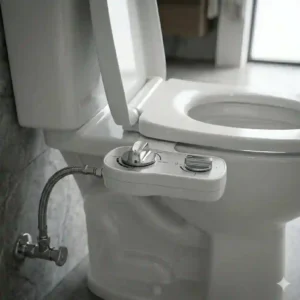
When mapping out a washroom renovation, facility managers frequently ask me to compare electronic bidet seats against traditional standalone ceramic bidets or non-electric retrofit wands. A detailed comparison reveals distinct operational differences.
| Metric | Electronic Bidet Seat | Traditional Standalone Bidet | Non-Electric Wand |
| Space Required | Zero (mounts on toilet) | 12-15 sq. ft. of floor space | Zero (mounts on toilet) |
| Plumbing Required | Cold water line only | Hot, Cold, and dedicated drain | Cold water line only |
| User Experience | Warm, automated, air-dry | Manual, requires straddling | Cold water shock, manual |
| ADA Compatibility | Excellent (maintains transfers) | Poor (requires extra transfer) | Fair |
Looking at the data, the electronic commercial bidet seat is the undeniable winner for modern facility retrofits. Traditional standalone ceramic bidets require dedicated hot water lines, separate drain lines, and massive amounts of floor space, making them mathematically impossible for commercial stall layouts. Non-electric wands are cheap, but blasting tenants with 45-degree winter tap water will generate endless HR complaints. The electronic seat perfectly bridges the gap, requiring only a GFCI outlet and a simple cold-water T-valve connection.
🔍 How to Choose a commercial bidet for Your Business
Selecting the right hardware requires a strict evaluation framework. Here is my consulting checklist for making the right procurement decision:
-
Assess the Electrical Infrastructure First: Before looking at products, check your electrical panel. Do you have dedicated 20-amp GFCI receptacles near the toilets? If yes, you can buy instant-heating models. If no, and you cannot run new wire, you must rely on lower-draw tank models or abandon the project entirely. Never run extension cords in a commercial bathroom.
-
Evaluate the User Demographic: Are your users highly technical (engineers, software devs) or an older, less tech-savvy demographic? High-tech users appreciate endless customization and wall screens. Older demographics require physical side-panels with large, tactile buttons to reduce anxiety.
-
Determine the Vandalism Risk: If the washroom is locked and requires a keycard (high trust), wireless remotes are safe. If the washroom is open to street foot traffic (low trust), you absolutely must buy a model with a fixed, side-arm control panel to prevent theft and tampering.
-
Check Bowl Compatibility: Commercial toilets often feature heavy-duty flushometers (the large chrome pipes extending from the wall). You must measure the distance from the seat bolt holes to the flushometer pipe. Many bulky bidet models will physically collide with the flushometer, making installation impossible. Always specify “elongated, slim-profile” for flushometer toilets.
⚠️ Common Mistakes When Upgrading Office Washrooms
Even seasoned facility managers make catastrophic errors when rolling out a commercial bidet program. Here are the pitfalls I see repeatedly.
Ignoring the Toilet Seat Bumper Gap
Commercial toilet bowls (especially elongated ones) are often sloped slightly differently than residential bowls. When you bolt a rigid bidet seat onto them, there might be a half-inch gap under the front of the seat. When a 250-pound user sits down, the plastic flexes and snaps the internal motherboard.
Insight: Always order structural seat bumpers to fill any gaps between the porcelain and the bidet seat ring.
Buying Residential Models for Commercial Duty Cycles
I cannot stress this enough: buying a $150 no-name bidet from an internet ad for your 30-person office will result in failure within 90 days. Residential models use plastic T-valves that cannot handle commercial building water pressure surges, leading to catastrophic overnight flooding. Always ensure your chosen model utilizes a solid brass T-valve and braided steel hosing.
Forgetting the Water Hardness Factor
If your building is in a region like the American Southwest, your water is practically liquid rock. The calcium will destroy the tiny motorized gears inside the bidet nozzle within months. If you do not install inline sediment and ion-exchange filters, you are throwing your capital expenditure down the drain.
📉 Long-Term ROI and ADA Compliance Considerations
The business case for a commercial bidet extends far beyond tenant luxury—it is a measurable operational asset. Let’s look at the Total Cost of Ownership (TCO) and compliance metrics.
The Paper ROI (Return on Investment)
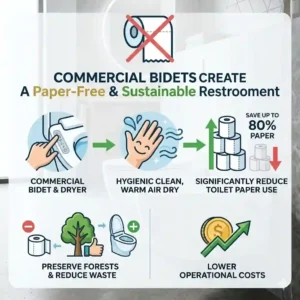
An average office worker uses roughly 1.5 rolls of toilet paper per week. For a 100-person office, that is over 7,500 rolls annually. A high-quality commercial bidet reduces toilet paper consumption by 75% to 80% (users only need paper to pat dry). When you factor in the cost of commercial jumbo rolls, plus the reduced labor of janitorial staff restocking dispensers, a $600 bidet seat typically pays for itself in just 14 to 18 months.
The Hidden Plumbing Savings
Commercial plumbers charge upwards of $150/hour for emergency calls. The leading cause of commercial toilet clogs? Excessive use of low-quality, non-dissolving industrial toilet paper, often combined with flushable wipes (which are never actually flushable). By removing the reliance on paper and wipes, bidet seats virtually eliminate clogged trap-ways.
ADA Compliance Navigations
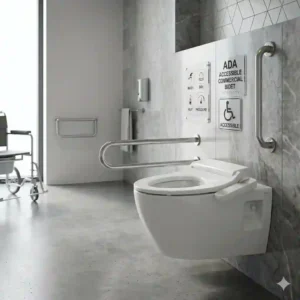
Under the Americans with Disabilities Act (ADA), accessible toilet stalls require specific clear floor space for wheelchair transfers. Because electronic bidet seats mount directly to the existing fixture, they do not encroach on this mandatory transfer space. In fact, many occupational therapists recommend bidets for ADA stalls because they restore independence for users with limited upper-body mobility.
Insight: If outfitting an ADA stall, always mount the bidet’s remote control on the adjacent grab bar wall at a height between 15 and 48 inches from the floor, per ADA.gov reach range guidelines.
✨ Don’t Miss These Exclusive Deals!
🔍 Ready to transform your washrooms and slash your consumable costs? Click on any highlighted product above to check current pricing and availability. Make the upgrade today—your tenants and your bottom line will notice the difference immediately!
🏁 Conclusion
Upgrading your facility with a commercial bidet is one of the highest-impact, lowest-footprint renovations you can execute in 2026. As we’ve explored, moving away from primitive paper-based hygiene not only elevates the tenant and employee experience but drastically reduces consumable overhead and emergency plumbing interventions.
Whether you opt for the bulletproof durability of the Bio Bidet Bliss BB2000 for a bustling tech hub, or the clinical precision of the American Standard SpaLet for a healthcare setting, the key to success lies in matching the hardware to the environment. Remember to prioritize your electrical infrastructure, implement strict non-abrasive cleaning protocols, and educate your users. Make the switch, and your facility will set a new standard for modern wellness.
❓ FAQs
❓ How long does a commercial bidet last in an office setting?
✅ With proper maintenance and filtered water, a high-quality commercial bidet lasts 5 to 7 years. Residential models placed in commercial environments usually fail within 6 to 12 months due to hinge fatigue and component burnout…
❓ Do bidet seats require hot water plumbing lines?
✅ No. Electronic bidet seats connect exclusively to the existing cold water line at the toilet base. They use internal electric heating elements to instantly warm the water before it touches the user…
❓ Can a bidet seat be installed on a flushometer toilet?
✅ Yes, but with strict caveats. You must ensure the bidet seat’s rear housing is slim enough to clear the vertical chrome flushometer pipe. You also need a specialized commercial T-valve to tap into the building’s water supply…
❓ Are commercial bidets sanitary for multiple users?
✅ Yes. The nozzles never touch the user. Advanced models feature self-cleaning protocols, UV light sterilization, and electrolyzed water to sanitize the wand before and after every single use, preventing cross-contamination…
❓ How much electricity does a commercial bidet use?
✅ Standby power is minimal (around 5-10W). During an active wash cycle, instant-heating models can draw up to 1500W for about 60 seconds. Overall daily energy consumption adds less than $2 to your monthly utility bill per unit…
📚 Recommended for You
- Bidet T Adapter Guide: 5 Real Upgrades to Prevent Leak Disasters & Boost Bathroom Safety
- 5 Best Options for a female bidet in 2026: An Expert’s Guide
- 5 Best Auto Bidet Seats of 2026: A Plumber’s Honest Review
Disclaimer: This article contains affiliate links. As an Amazon Associate, I earn from qualifying purchases. If you purchase products through these links, we may earn a small commission at no additional cost to you.
✨ Found this helpful? Share it with your friends! 💬🤗
[addtoany]
